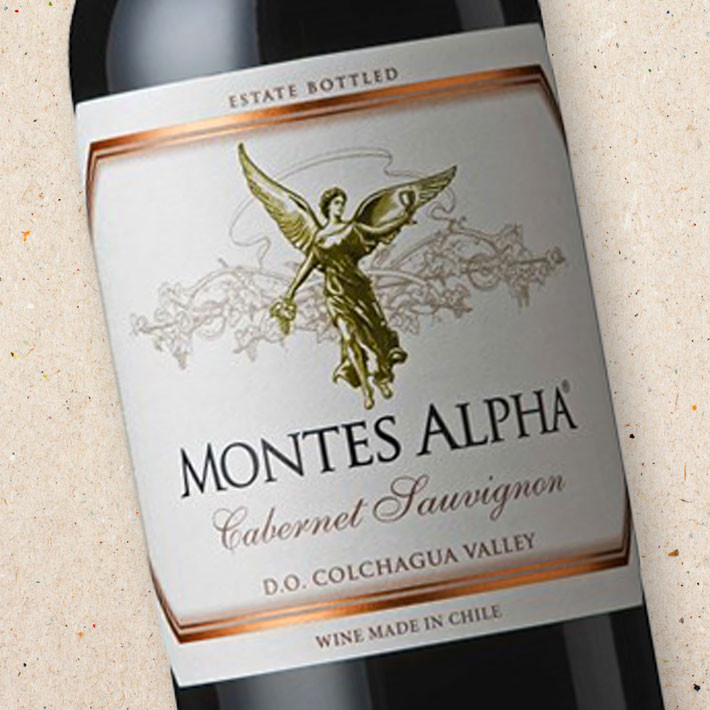

Montes Alpha Colchagua Cabernet Sauvignon 2022

This wine is deep ruby red in colour, and boasts complex aromas of cherry, strawberry and root beer interlaced with cigar smoke black pepper and toasty notes from the time spent in oak. On the palate, this wine boasts rounded tannins and a vibrant and flavourful finish.
The Cabernet Sauvignon vineyards that produce the fruit for this wine are located in the Colchagua Valley, at the Montes Apalta and Marchigüe estates. Apalta has very diverse soils, as the composition is influenced by eroded material from mountainside. The soils are generally deep in the flatter areas, and thinner at the foot of the mountains and at higher elevations. The Cabernet Sauvignon vines are located in areas that are flat or at a slight incline, where the soil is deeper and has moderate moisture retention. Fruit from Apalta shows elegant and complex aromas, as well as intense colour. Marchigüe is flatter, with lower-lying hills. The soils are shallow with medium clay content and a high capacity for water retention. The vineyards are planted on the flat areas, with little clay and a high percentage of rounded stones. The Cabernet Sauvignon vineyards are planted at a density of 5,555 plants per hectare (2,250 pl/acre) and double Guyot trained, producing yields of approximately 7,000 kg of grapes per hectare (2.8 ton/acre).
The fruit for this wine was harvested by hand and transported to the cellar in large containers. A manual selection was carried out prior to destemming. The grapes were macerated in tanks for five days, after which selected yeasts were added for a controlled fermentation lasting 7-10 days. The wine was racked into stainless steel tanks for malolactic fermentation. The wine was then racked once again and aged in French oak barrels for 12 months. A portion of the wine remained in concrete tanks and was blended into the final wine just before bottling.