Kanakaris NOTOS Retsina 2023

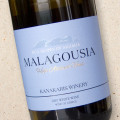
This modern Retsina impresses with notes of white peach and lemon, alongside the unique aromatics and texture imparted by the pine resin. The finish is refreshing and crisp.
NOTOS (Greek for ‘South’) references Kanakaris’ Peloponnese homeland. The Roditis is planted at between 450 and 700 meters above sea level on the north-facing slopes of Aigialeia, overlooking the Corinthian Gulf. The vines grow on sandy soils with a red and white clay topsoil and are planted on either side of the valleys and gorges of the five rivers of the Peloponnese, which flow down to the Corinthian Gulf. The vines have adapted well to the high elevation and sandy soils, which provide ideal conditions for slow ripening, aromatic concentration and freshness. The vines are both gobelet trained and on trellises.
The Roditis grapes were harvested by hand and carefully selected in the vineyards, then transported in small crates to the winery. The fruit was destemmed and gently crushed before fermentation took place at low temperatures not exceeding 15°C in stainless steel tanks. Notos Retsina is made by co-fermenting a small amount of pine resin with Roditis to create afresh, aromatic white with a lightly resinous texture. The wine did not undergo malolactic fermentation and there was no oak ageing, to preserve its delicate aromatics.
| RRP | £11.99 |
| Bottle size | 75cl |
| Vintage | 2023 |
| Alcoholic strength | 11.5% |
| Country | Greece |
| Region | Peloponnese |
| Grapes | Roditis 100% |
| Residual sugar (g/l) | 1 |
| Vegetarian | Yes |
| Vegan | Yes |
| Organic | No |
| Biodynamic | No |
| Closure | Screwcap |
Aigialeia, in the northwestern Peloponnese, is among Greece’s most distinctive wine-growing regions. Set against the rugged terrain of the Panachaiko mountains, the area’s high elevations, northern exposure, steep, sloping vineyards and proximity to the Corinthian Gulf help moderate high temperatures, creating a growing environment unlike anything else in the Peloponnese. It is here that Michalis Kanakaris founded his eponymous winery in 1979, focusing on indigenous varieties Roditis, Sideritis and Mavro Kalavrytino grown on Aigialeia’s sandy, red/white clay soils. Today, Kanakaris is run by the third generation of Michalis’ family, with brothers Stefanos and Michalis taking over the reins in 2009.
Capturing a sense of place is at the core of Kanakaris’ winemaking ethos. Stefanos and Michalis work closely with like-minded growers, farming 55 hectares of vines planted between 450 and 1150 metres above sea level. These vineyards, dotted with olive groves and citrus trees, are situated on either side of the valleys and gorges of the five rivers of the Peloponnese, which flow down from the mountains to the Corinthian Gulf. While maintaining their grandfather's original focus on Roditis, Sideritis and Mavro Kalavrytino, the brothers have also added Malagousia , Moschofilero and Agiorgitiko to their remit, alongside the international varieties Merlot and Syrah. All Kanakaris’ fruit is hand-harvested and vinified in their recently renovated modern winery, equipped with a range of stainless-steel tanks to capture the aromatics of Greece’s indigenous varieties and Aigialeia’s vineyards.
30 other products in the same category: